Basbousa / Hareeseh – Middle Eastern semolina yogurt cake

Last Updated on March 15, 2025 by Jacqueline Rafidi
Basbousa is a sweet, buttery semolina cake draped with a simple syrup.

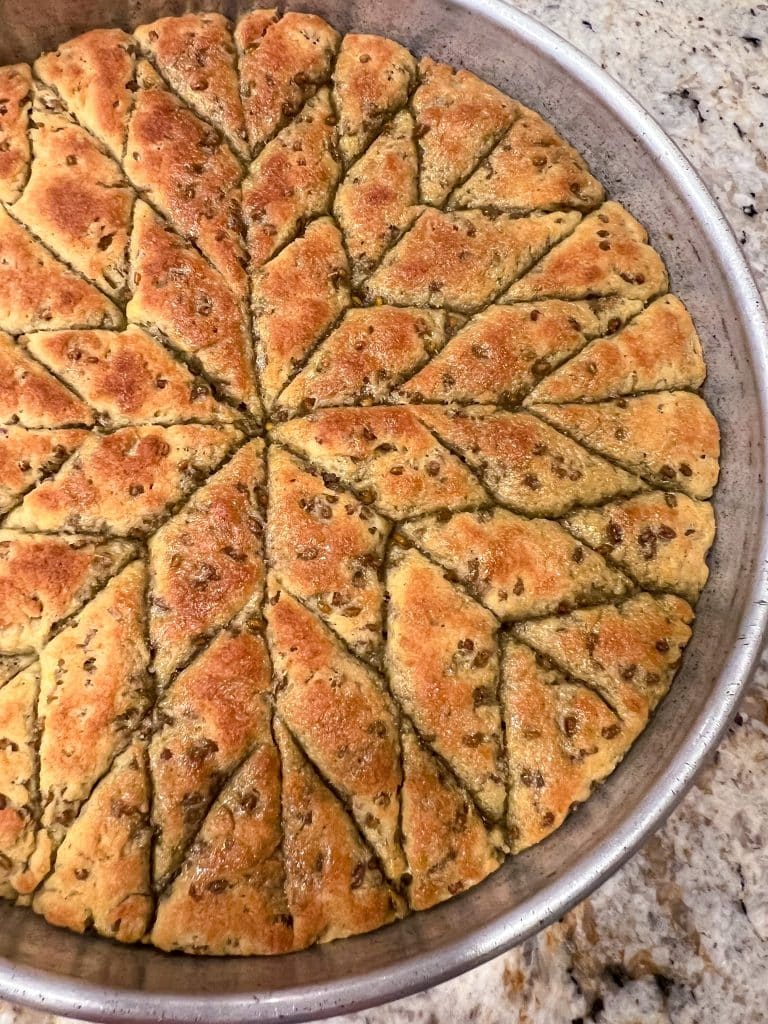
This famous dessert goes by many names. Depending on the country, you may have heard this called basbousa, harisseh / hareeseh, namoura, or revani. If you’ve ever had basbousa, you know just how special this Middle Eastern dessert is. It’s found in pastry shops throughout Middle Eastern countries and it’s the kind of treat that brings back memories of family gatherings, special occasions, and warm hospitality, especially with a cup of coffee. It’s sweet with a tang of yogurt. The texture is similar to hilbeh, a fenugreek semolina cake, and totally different from a regular cake made with all purpose flour, although the idea is similar to a tres leches cake because it’s soaked in the simple syrup. It’s a dessert that is simple to make yet incredibly satisfying, with its signature golden brown top and melt-in-your-mouth texture.
It’s SO simple to make, but man…if you don’t get the ratio correct, the final product is not going to be the correct texture. When I till you I attempted this recipe more times than I can count on 2 hands, I mean it. And I’m very happy to finally have it up on the blog now! There are different variations to this basic harisseh recipe / basbousa, some have a cheese filling or ricotta cheese, some have a coconut, some have a mixture of nuts on top and they’re all delicious.
What is Basbousa?
Basbousa is a sweet semolina cake made with simple ingredients like coarse semolina, plain yogurt, clarified butter (samneh/ ghee), and sugar. What makes it truly unique is the way it’s soaked in a quick sugar syrup with a touch of rose water, orange blossom water, or lemon juice. The result is a perfectly moist and tender cake with a soft crumb that’s sweet but not overly so, making it an irresistible treat for dessert lovers.
This beloved Middle Eastern dessert goes by different names depending on the region. In Egypt, it’s commonly known as basbousa, while in the Levant (Lebanon, Syria, Jordan, and Palestine), you’ll often hear it called hareeseh or namoura, or even revani in Turkey. Throughout the Arab world, variations of basbousa exist with slightly different ingredients, but the essence remains the same—a semolina-based cake with a hint of citrus and floral aromas.
Ingredients
The beauty of basbousa is in its simplicity, but the ratio really matters here. Here’s what you’ll need to make this delicious Middle Eastern dessert:

For the Cake:
- Coarse semolina – The main ingredient. It MUST be coarse semolina. Fine semolina will yield a dense cake.
- Ghee – also known as samneh. Room temperature or melted.
- Plain yogurt – You need the extra liquid from plain, traditional yogurt to lend moisture to the cake. Greek yogurt does not work in this dessert.
- Baking powder
- Baking soda
- Sugar
- Pinch of salt
- Peeled, blanched almond for garnish – you can also use slivered almonds or another nut of choice.
For the Simple Syrup:
- Sugar
- Water
- Splash of lemon juice
- Rose water or orange flower water (optional)
How to Make Basbousa
Step 1: Make the Syrup
Before you start on the basbousa batter, you’ll want to prepare the syrup so that it has enough time to cool. Pouring hot syrup over the hot basbousa won’t allow it to absorb the syrup properly and it can change the texture of the cake – the steam will make it too soft and it will crumble.
Add the sugar and water to a small saucepan. Mix them together to combine before bringing to a boil over high heat. Stir until the sugar dissolves completely (3-5 minutes), then let it simmer over high heat for another 3 minutes before adding in the lemon juice and rose water if using. The syrup should be a bit thinner than maple syrup (not “pancake syrup” which is thicker but actual maple syrup). Set aside to cool while you make the cake.
Step 2: Prepare the basbousa/harisseh
In a large mixing bowl, combine the coarse semolina (smeed) and ghee, then add in the sugar and mix well. I like to mix this part with my hands so I can feel if there’s any dry semolina in the bottom of the bowl. Let this mixture sit for at least an hour to allow the semolina to absorb the ghee. This gives you a softer crumb in the end.

After an hour passes, place the yogurt in a bowl with the salt, baking powder and baking soda. Mix really well and let this sit for about 10 minutes or until the yogurt fizzles and puffs a bit from the baking soda/powder. Add the wet ingredients into the dry ingredients and combine well. The batter should be thick, but not kneadable like bread. I like using my hands for this part as well, but you can also use a spatula.


Step 3: Assemble and Bake
Preheat your oven to 350°F (175°C) and grease an 11 inch round pan. If you don’t have one, just use a 9×13, although the cake may be a bit thicker. No parchment paper needed here! Traditionally this is done with a bit of tahini which gives a delicious and subtle nutty flavor to the cake, but because my daughter is allergic to sesame, I use butter or samneh (ghee) which works just as well. Pour the semolina batter into the prepared pan and use your hands or the back of a spoon to spread it out into an even layer. Very important, so the cake cooks and browns evenly.


Using a sharp knife, score the batter into diamond shapes or square shapes – Here is how I like to cut mine:

This helps create those signature basbousa shapes. Place a blanched whole almonds or slivered almond in the center of each piece.


Bake for 30-35 minutes, then broil for 3-4 minutes – turning the pan as necessary, until the top is evenly golden brown.
Step 4: Add the Syrup
Once your basbousa cake comes out of the oven, pour the cool syrup evenly over the hot basbousa. Don’t leave any part untouched with the syrup! The basbousa will absorb all that delicious sweetness! Now for the hardest part!! The only thing left for you to do is wait. Let it sit for at least an hour before serving so the flavors can meld together perfectly. This is so imporant, I feel you don’t get the true feel for basbousa until it sits for multiple hours, to be honest, but I always end up having a piece about an hour after baking so I can taste it warm, even though this sweet cake tastes even better the next day.


Tips for the Best Basbousa
- Coarse semolina only! – Trust me, I’ve attempted both ways and with a combination of the two. You need the coarse to achieve the right texture. You can find coarse semolina online here or at a local Middle Eastern grocery store.
- Don’t overmix the batter. Basbousa batter is naturally thick and should not be overworked.
- Let the syrup cool before pouring it over the hot cake. This contrast in temperature helps the cake absorb the syrup more effectively.
How to Store Basbousa
Store the leftovers in an airtight container at room temperature for up to 5 days. You can also refrigerate basbousa for up to a week. Just warm it up in the microwave or toaster oven for a few seconds before enjoying it again!
I would not freeze this cake. But if you must, I would freeze BEFORE putting the syrup on. Warm it in the oven until its completely warmed through and drizzle the syrup on. Let it sit for a few hours before enjoying.
Serving Suggestions
Basbousa is delicious on its own, but if you want to take it up a notch, try serving it with:
- A scoop of vanilla ice cream
- A side of fresh berries
- A cup of strong Arabic coffee or mint tea
Whether it’s served at religious holidays, family gatherings, or as a sweet treat for guests, this Middle Eastern classic carries with it a sense of warmth and nostalgia. I remember having basbousa as a little kid, I have an aunt that would make it particularly well, and this was the closest I’ve gotten to her recipe! Now, every time I make basbousa, it brings back those memories and reminds me why food is such an important part of culture and connection.
So, next time you’re looking for an easy, delicious dessert, give this best basbousa recipe a try! I’d love to hear how it turns out for you—leave a comment and let me know.

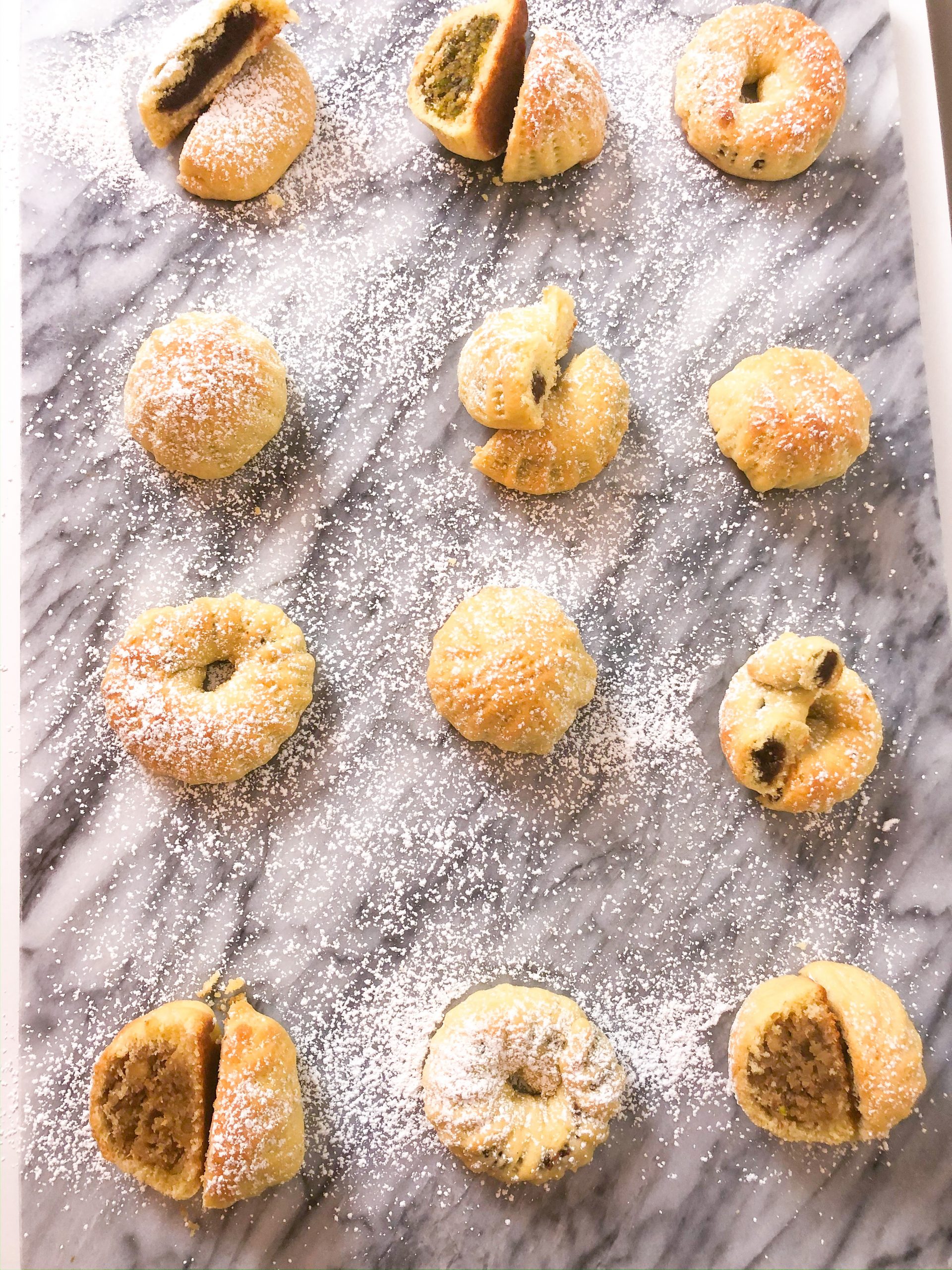
When you make this basbousa/hareeseh, comment down below and rate this recipe to let me know your thoughts! Also, share a picture or tag me on Instagram @thebitewithjackie, I love seeing your remakes!
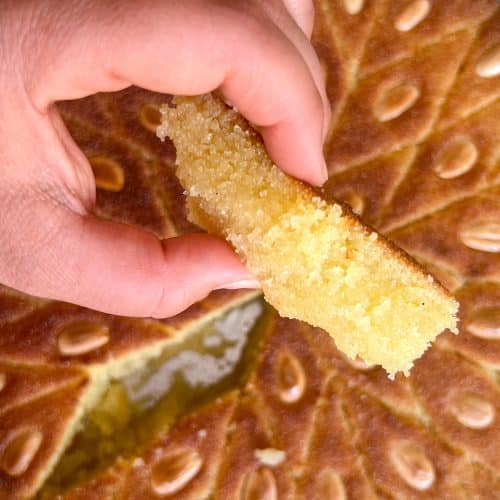
Basbousa/Hareeseh – Middle Eastern Semolina Yogurt Cake
Ingredients
For the simple syrup (attar):
- 2 cups sugar
- 1 cup water
- Squeeze of fresh lemon juice
For the basbousa:
- 3 ½ cups coarse semolina
- ½ cup clarified butter samneh/ghee at room temp or melted
- 1 cup sugar
- 1 ½ cup plain yogurt NOT Greek yogurt
- 1 teaspoon baking soda
- ½ teaspoon baking powder
- ½ teaspoon salt
- Clarified butter or tahini for greasing the pan
Instructions
- Before you start on the basbousa batter, prepare the simple syrup so that it has enough time to cool. Add the sugar and water to a small saucepan. Mix them together to combine before bringing to a boil over high heat. Stir until the sugar dissolves completely (3-5 minutes), then let it simmer over high heat for another 3 minutes before adding in the lemon juice. The syrup should be a bit thinner than maple syrup while it’s hot (not “pancake syrup” which is thicker, but actual maple syrup). Set aside to cool while you make the cake.
- In a large mixing bowl, combine the coarse semolina (smeed) and ghee with your hands until it resembles wet sand. Then, add in the sugar and mix well. I like to mix this part with my hands so I can feel if there’s any dry semolina in the bottom of the bowl. Let this mixture sit for at least an hour to allow the semolina to absorb the ghee. This gives you a softer crumb in the end.
- After an hour passes, place the yogurt in a separate bowl with the salt, baking powder and baking soda. Mix really well and let this sit for about 10 minutes or until the yogurt fizzles and puffs a bit from the baking soda/powder. Add the wet ingredients into the dry ingredients and combine well. The batter should be thick, but not kneadable like bread. I like using my hands for this part as well, but you can also use a spatula. Let this rest while the oven preheats.
- Preheat your oven to 350°F (175°C) and grease an 11 inch round pan. If you don't have one, just use a 9×13, although the cake may be a bit thicker. Once preheated, grease the pan with more clarified butter or tahini paste for a nutty flavor. Pour the semolina batter into the prepared pan and use your hands or the back of a spoon to spread it out into a smooth, even layer. Very important, so the cake cooks and browns evenly.
- Sprinkle on some melted butter or clarified butter on the top. Then, using a sharp knife, score the batter into diamond shapes or square shapes following the diagram above. Place a blanched whole almonds or slivered almond in the center of each piece.
- Bake for 30-35 minutes, then broil for 3-4 minutes – turning the pan as necessary, until the top is evenly golden brown.
- Once your basbousa cake comes out of the oven, immediately pour the cooled syrup evenly over the hot basbousa. Don’t leave any part untouched with the syrup! The basbousa will absorb all that delicious sweetness! Now for the hardest part!! The only thing left for you to do is wait. Let it sit for at least an hour before serving so the flavors can meld together perfectly. This is so imporant, I feel you don’t get the true feel for basbousa until it sits for multiple hours, to be honest, but I always end up having a piece about an hour after baking so I can taste it warm, even though this sweet cake tastes even better the next day.
- Enjoy by itself or with a hot cup of coffee or tea. Sahtein!